
| Status: | Active, open to new members |
| Organiser: |
Penny da Silva
|
| Organiser: |
Fiona Blackmore
|
| Group email: | London Studies 3 group |
| When: | Monthly on Wednesday all day The third Wednesday of the month; occasionally another day that week. |
We take it in turns to organise a monthly trip to London to visit a site of interest, especially places that are less well known. We usually work in pairs and sometimes do a recce trip ahead of time. We travel up by train during the off-peak period and have lunch in a nearby pub or restaurant. Forthcoming visits include Apsley House in September and maybe Neasden Temple later in the autumn. Our wonderful capital city boasts a wealth of amazing historic sights, including many that are not so well known. If you’d like to be part of this new group, email via the link above. We are a relatively new group and would welcome more members.
On a damp October morning, a small group of London Studies 3 group members met up at Charing Cross Station. Undeterred by the prospect of a long trip up the Piccadilly Line and a 'shuttle' bus journey from Oakwood station, their plan was to visit Trent Park House near Enfield, with its recently opened 'Museum of Secrets.'
During the inter-war years, this substantial mansion was owned by Conservative MP and renowned socialite, Philip Sassoon (cousin of the poet Siegfried). The ground floor of the House has been restored to the glory of its 1930s heyday, when royalty and politicians mingled with film stars at Philip's weekend parties. At the outbreak of war, the building was requisitioned by the Ministry of Defence and, from 1943, was used to house captured German generals. Due to a bugging system, the generals' after-dinner conversations were revealing information to a team of 'secret listeners' in the basement - some of this information was to prove vital to the allied war effort.
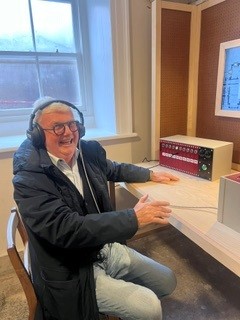
Having admired Sassoon's immaculate decorative taste on the ground floor rooms, the group descended to the basement, where the wartime listening station has been recreated as an interactive museum. The museum was both realistic and imaginatively designed, showing short films depicting wartime operations and providing an opportunity to listen to some prisoners' conversations through headphones.
Following visits to the bookshop and the convenient cafe, members embarked on the return journey - having been engaged by a taste of wartime intrigue.
(Mark Gorringe, Visit Organiser)
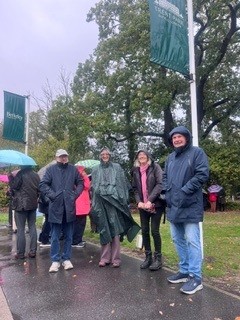
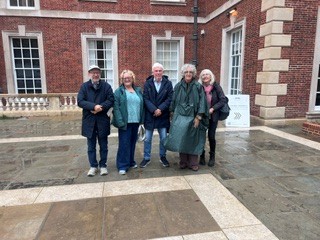
On yet another sunny summer morning, on Wednesday 15 July Graham Lacey led a London Studies 3 group trip to Highgate Cemetery to which the party of four travelled by the full range of public transport (i.e. train, underground and bus) as well as a short walk through the pretty Waterlow Park. Divided by Swain’s Lane, Highgate Cemetery, now run for public benefit by the Friends of Highgate Cemetery, consists of the older West side, founded in 1839, and the East, acquired in 1860. While many of the 53,000 graves have been neglected those of the more recently buried are easily identified. From George Eliot, Catherine and Dora Dickens (wife and daughter of Charles) and Michael Faraday to Douglas Adams, Malcolm Mclaren and Alexander Litvinenko - to name but a few - the cemetery is packed with famous figures of the distant and not so distant past. The most well known, of course, is the grave of Karl Marx which was moved from its original less obtrusive spot to a more prominent one, not least so that some of his acolytes, such as Paul Foot and Eric Hobsbawm, could be buried alongside him. After a ninety minute stroll through the cemetery, members of the party walked down to Boris Nemtsov Square (named after the Russian opposition leader assassinated in February 2015) around which is a number of delightful cafes. After a very tasty lunch on the terrace of one of them, we travelled back to central London, in plenty of time to get home to watch yet another England World Cup defeat at the hands of Argentina - which, however, did not overshadow a very enjoyable as well as educational day out.
The inaugural trip of the new London Studies group 3 was to the Postal Museum in Clerkenwell. We travelled to Farringdon Station independently but the whole group of 6 met up at the museum, which we hadn’t realised is at the infamous Mount Pleasant sorting office.
Thrillingly, the first activity was a 15-minute ride on a loop of the narrow-gauge underground Mail Rail, which was used between 1927 and 2003 to transport millions of items of mail between sorting offices in London. Mount Pleasant was roughly in the middle as it stretched from Whitechapel in the east to Paddington in the west.
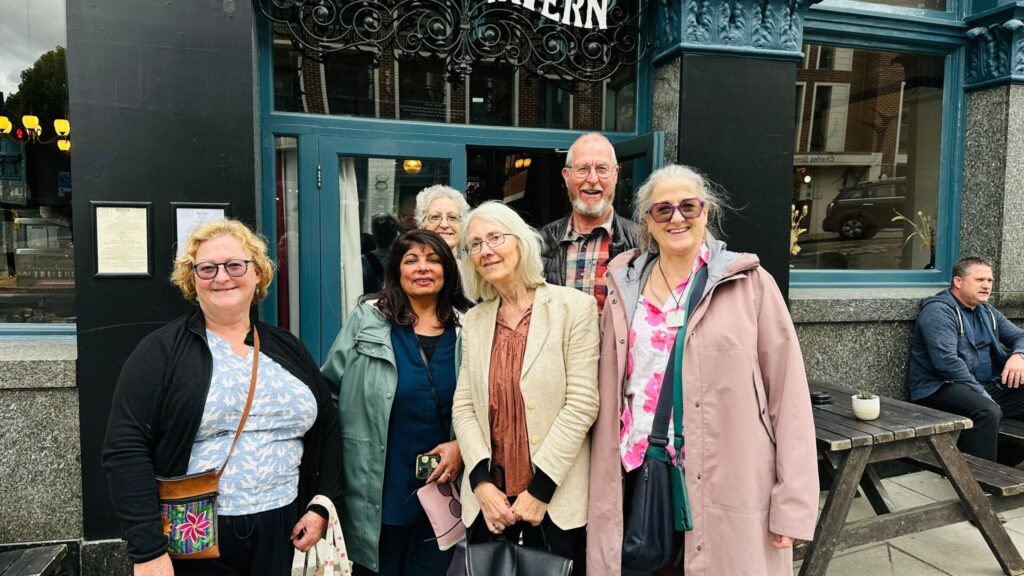
We saw some old stations and mail trains, and there were audiovisual displays showing how chaotic and busy the railway used to be. Every station had a cat to catch mice. The actual Postal Museum is across the road from the railway. It explains the history of the postal service and telephones, and has an impressive collection of both green and red mail boxes. We were amused by a 1936 GPO film “The Fairy of the Phone”, which explained how to answer the telephone: never just say "Hello"; give the phone number and your name. That's exactly how I was taught to answer the phone as a child. It seems strange that, not long ago, both the postal service and landlines were central to all our lives, but have now been replaced almost entirely by new technology.
Lunch was tasty and excellent value at a traditional pub, The Anchor, and we then made our way back to the train by bus or on foot. If you like exploring new places in London why not join the group?
Last updated 25 October 2026